
What Exactly Is Stamped Concrete?

Think of stamped concrete as a two-step process. First, we pour fresh concrete just like any regular concrete job. But before it fully sets, we press textured stamps into the surface to create realistic patterns that look like other materials. It’s basically giving concrete a makeover while it’s still workable.
The stamps themselves are made from rubber or polyurethane moulds that replicate the texture and pattern of whatever look you’re after – whether that’s natural stone, brick pavers, slate tiles, or even timber decking. We press these stamps into the concrete, creating impressions that capture all the little details and texture variations you’d see in the real thing.
What makes it decorative is the combination of pattern and colour. We don’t just stamp plain grey concrete and call it a day. Before stamping, we add colour hardeners to the surface, and after stamping we often apply release agents and stains to create depth and variation. This is what gives stamped concrete that authentic, multi-toned look instead of that flat, obviously-fake appearance.
For Ipswich properties, this process works particularly well because we’re still dealing with properly installed concrete underneath – which means it can handle our clay soil movement when it’s done right. The decorative finish on top doesn’t compromise the structural integrity. You’re getting the strength and durability of a quality concrete slab with the visual appeal of premium materials.
The whole installation usually takes a few days from start to finish, depending on the size of your project. Way faster than laying individual pavers or natural stone.

Pattern Options That Actually Look Good
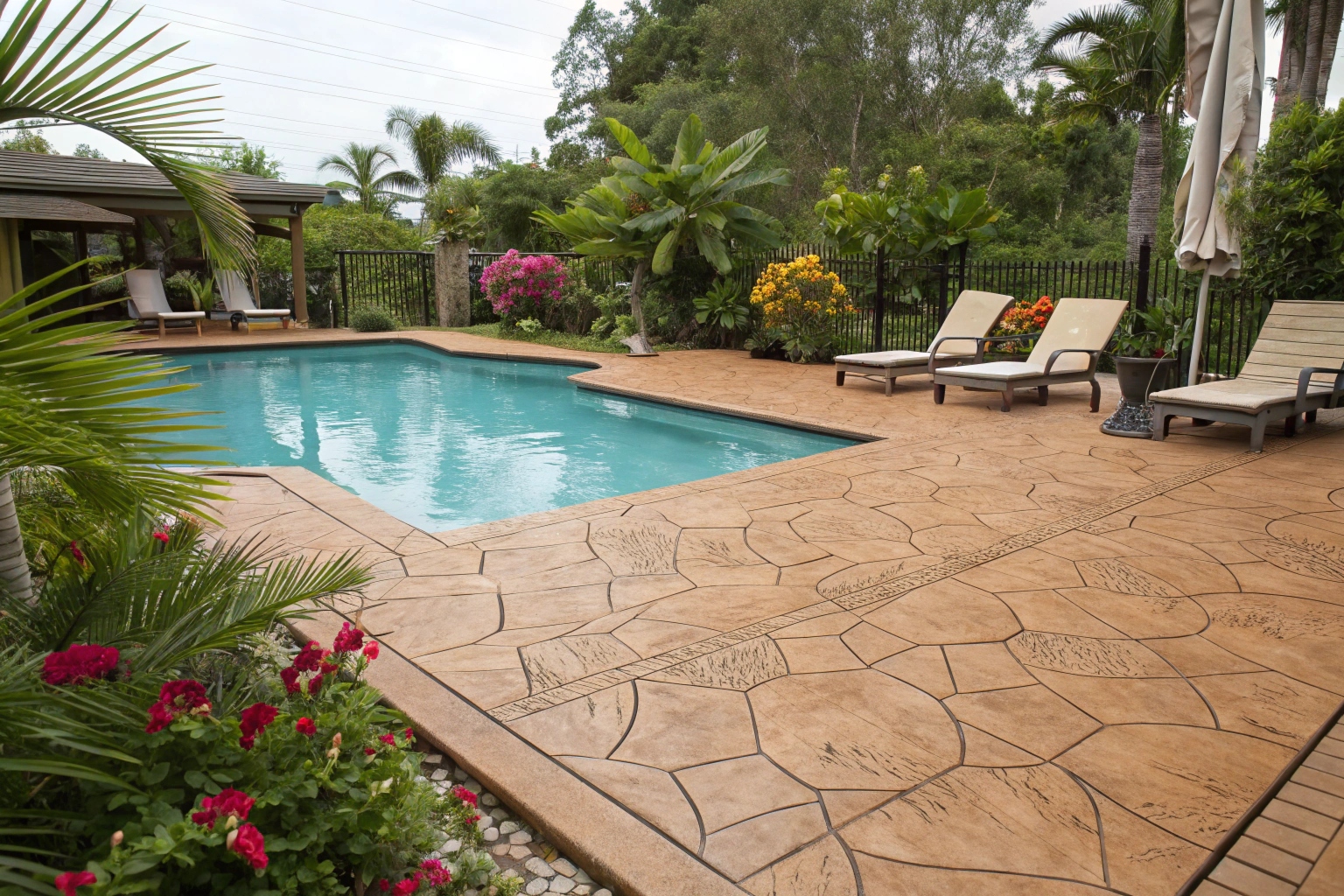
Here’s where stamped concrete gets interesting – you’re not stuck with one or two boring options. We’ve got patterns that replicate just about any material you can think of, and some work better than others for different applications around Ipswich homes.
Colour Choices Beyond Basic Grey
Plain grey concrete might be practical, but it’s boring as hell. That’s where colour comes in – and with stamped concrete, you’ve got options that go way beyond picking a single shade.
Integral colours get mixed right into the concrete before we pour it. This gives you a base colour that goes all the way through, so if the surface ever gets chipped or worn down, you’re not seeing grey concrete underneath. Browns, tans, reds, and charcoals are popular because they mimic natural materials.
Surface colour hardeners are applied to the top layer while the concrete’s still fresh. These give you richer, more vibrant colours and also toughen up the surface. You can layer different colours to create depth – like a darker base with lighter highlights.
Stains and antiquing agents are where things get really interesting. After the concrete’s stamped and cured, we can apply acid stains or water-based stains to create multi-tone effects. This is what makes stamped concrete look authentic instead of flat and artificial. You’ll see colour variation just like you would in natural stone.
For matching your home’s exterior, we’ll look at your brick colours, roof tones, and existing landscaping. Terracotta and sandstone tones work well with Queensland-style homes. Charcoals and slate greys suit more contemporary builds.
The goal is creating something that looks natural – not like someone just painted concrete and hoped for the best. That means using multiple colours and tones to build depth and character.
Why Choose Stamped Concrete Over Pavers or Natural Stone
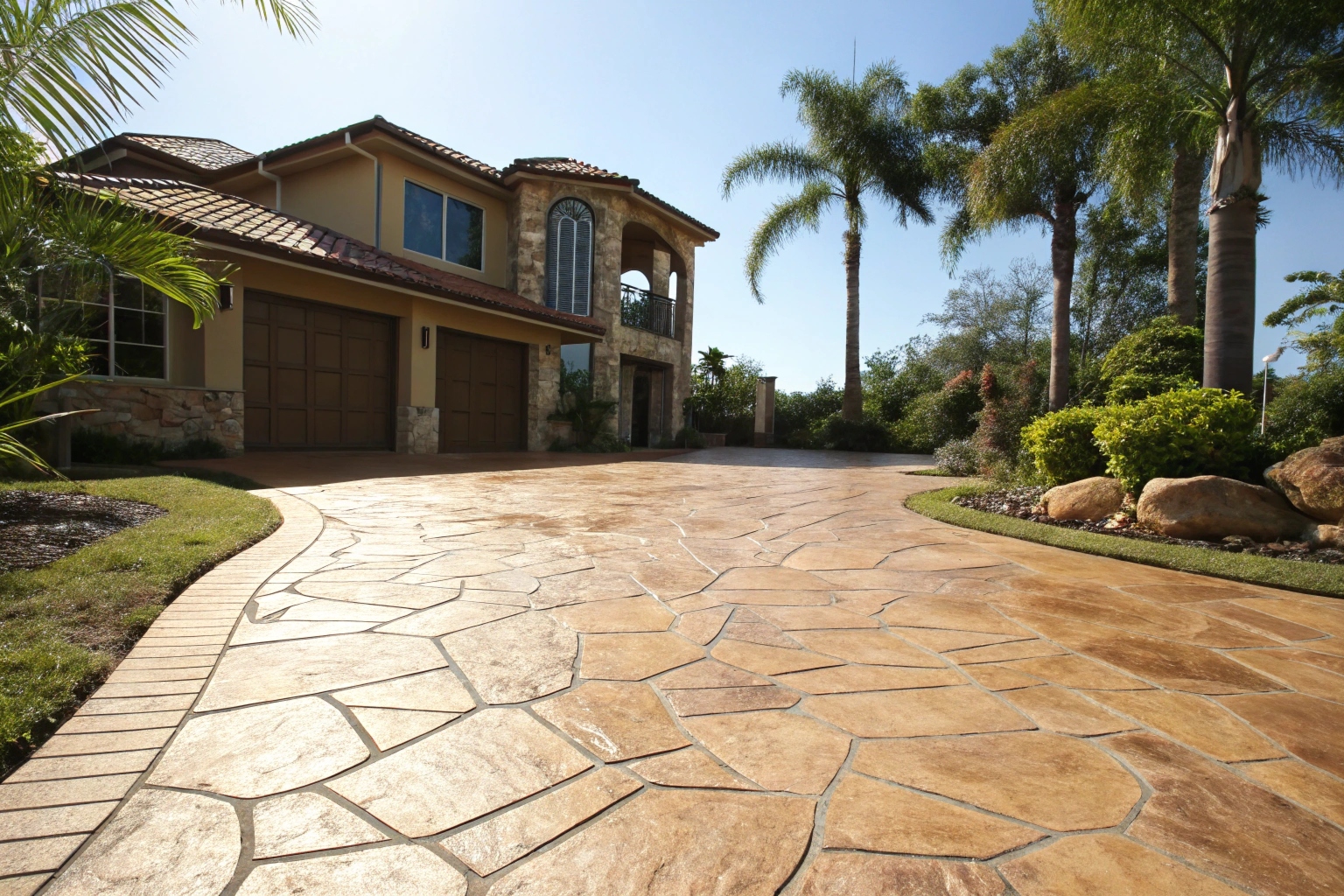
Let’s talk money first – because that’s usually what it comes down to. Stamped concrete costs roughly half what you’d pay for natural stone and about 30-40% less than quality pavers. You’re getting the look without the premium price tag.
But the cost savings don’t stop at installation. With pavers, you’re dealing with weeds popping up between joints within six months. Ants love making homes in those gaps too. Stamped concrete? Sealed, seamless surface. No joints means no weeds, no ant nests, no constant re-sanding.
Installation speed is another big one. We can pour and stamp a driveway in a couple of days, then you’re just waiting for curing. Compare that to laying individual pavers – you’re looking at weeks for the same area. Less disruption to your property, faster turnaround.
The seamless look is something pavers just can’t match. No grid lines, no visible joints, no pattern repetition that screams “this is fake.” Just continuous coverage that flows naturally across your space.
Maintenance is dead simple too. Sweep it, occasionally hose it down, reseal every few years. That’s it. You’re not relevelling sunken pavers, replacing cracked stones, or fighting the constant battle against weeds. For busy Ipswich homeowners, that time saving alone makes stamped concrete worth considering.
And here’s the thing – it doesn’t shift or settle like pavers can when our clay soils move. Once it’s down and properly installed, it stays put.
Frequently Asked Questions About Stamped Concrete
You’re typically looking at $100-150 per square metre for stamped concrete, depending on pattern complexity and colour choices. That’s roughly half the cost of natural stone and about 30-40% less than quality pavers. We’ll give you an upfront quote after assessing your specific project.
Any concrete can crack if the base isn’t prepared properly for Ipswich’s reactive clay soils. That’s why we focus on proper site preparation, reinforcement, and control joints. When done right, stamped concrete is just as durable as any quality concrete installation – and the patterns actually help hide minor cracks if they do appear.
Every 2-3 years is the sweet spot for Ipswich conditions. Resealing protects against UV damage, moisture penetration, and staining. It’s a straightforward process that keeps your stamped concrete looking fresh and extends its lifespan significantly.
Some gradual fading happens over time – that’s reality with any coloured surface in our climate. But quality colour hardeners and UV-resistant sealers slow this way down. Regular resealing helps maintain colour vibrancy for years.
Light foot traffic after 24-48 hours. Vehicle traffic on driveways after 7 days. Full cure takes about 28 days, but you’ll be using it well before then.
Ready to Transform Your Ipswich Property?
We’ve been creating stunning stamped concrete finishes for Ipswich homeowners who want the premium look without the premium price. Whether it’s a driveway, patio, pool surround, or entertaining area, we’ll work with you to design something that fits your property and budget.
Get a free quote today. We’ll come out to your property, discuss your options, and give you honest advice on what’ll work best for your specific situation. No pushy sales tactics – just straightforward guidance from locals who know Ipswich conditions inside out.
Call us or fill out our online form to get started. Let’s create something that makes your neighbours jealous.
