
How Thick Should a Concrete Slab Be for a Shed?
Shed slab thickness depends on your intended use and what you’ll be storing:
Standard Garden Sheds & Light Storage:
- 100mm thickness with steel mesh reinforcement
- Suitable for tools, garden equipment, and light machinery
- Handles typical residential shed loads
Workshops, Garages & Heavy-Duty Use:
- 150mm minimum thickness with rebar reinforcement
- Required for vehicles, heavy machinery, and workshop equipment
- Necessary for machinery sheds and commercial storage
Ipswich-Specific Considerations:
Our reactive clay soils demand proper reinforcement regardless of thickness. Even light shed slabs need steel mesh to prevent cracking from ground movement.
For workshops storing vehicles or heavy equipment, we recommend 150mm thickness with N12 rebar at 600mm centres. This isn’t overkill—it’s engineered specifically for Ipswich soil conditions and the loads your workshop will handle over decades of use.

Types of Shed Slabs We Install Across Ipswich

Site Preparation & Reinforcement for Ipswich Conditions
Understanding Ipswich’s Reactive Clay Soils: Standard excavation fails here because our clay soils expand and contract with moisture. Ground movement in Springfield, Redbank Plains, and Booval stresses concrete. Improper preparation causes cracking within months.
Excavation & Base Compaction: Excavation depths vary by shed type and site conditions. We remove organic material and unsuitable soils. Roadbase compaction creates a stable foundation. Sloping blocks need extra work. Drainage prevents water accumulation.
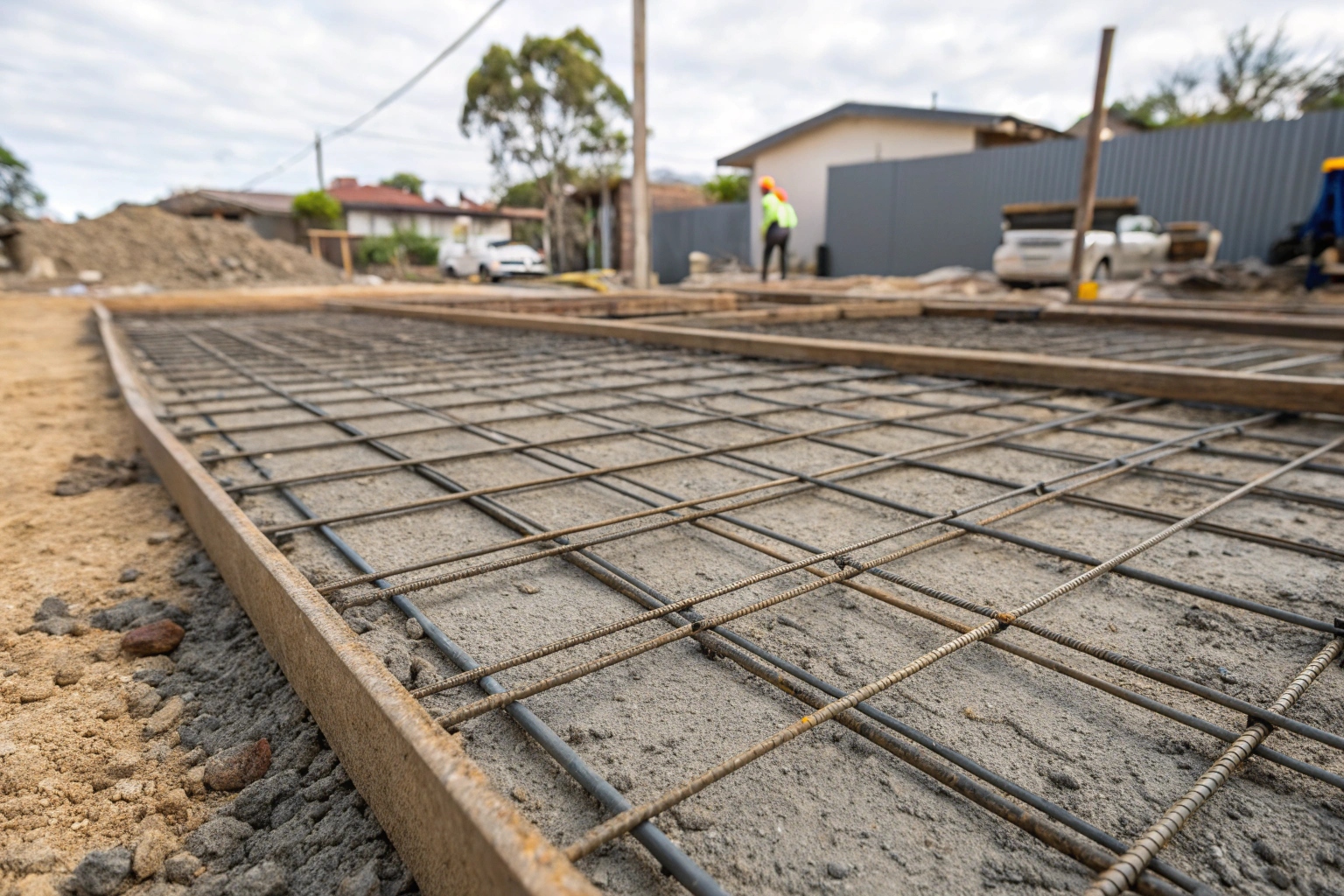
Steel Mesh for Light-Duty Sheds: SL72 mesh suits garden sheds and light storage. Proper placement height—not ground level—provides structural integrity. Corner and edge reinforcement prevents common crack patterns and protects against ground movement.
Rebar for Heavy-Duty Applications: N12 rebar at 600mm centres handles workshop and vehicle loads. N16 suits heavier machinery requirements. Grid patterns with tie-wire create an integrated structure. Edge thickening adds perimeter strength against soil movement.

Perfect Levelling & Anchor Point Installation
Why Level Matters for Shed Longevity: Uneven slabs cause door operation problems immediately. Structural stress leads to frame warping and damage. Water pooling creates rust and deterioration issues.
Our Levelling Process: Laser level technology provides 2mm accuracy across the entire slab area. Multiple checkpoints confirm consistency. We install drainage falls when required. Final verification happens before concrete sets.
Pre-Planning with Shed Suppliers: We work directly with your shed manufacturer’s specifications. Bolt-down positions get marked and verified before pouring. Frame layout and anchor spacing match your specific shed model.
Anchor Installation Methods: Dynabolts work for retrofitting after concrete cures. Cast-in threaded rods provide the strongest connection during pour. Chemical anchors guarantee hold in existing slabs. Corner square verification confirms perfect shed fit.
Shed Slab Costs & Pricing Factors in Ipswich
Size & Thickness Variables: Per square meter pricing changes with dimensions and thickness. Standard sizes cost less than custom due to formwork efficiency. Larger projects qualify for material volume discounts.
Site-Specific Factors: Access for trucks affects delivery costs. Sloping sites need extra excavation work. Distance from the street impacts pump requirements. Removal of existing structures adds preparation time and disposal costs.
Reinforcement & Specification Levels: Steel mesh costs less than rebar but suits lighter applications only. Engineered solutions add fees but provide structural guarantees. Finishing and sealing options enhance protection and appearance.
Getting Accurate Quotes: We need dimensions, intended use, and site photos for precise pricing. Site inspection reveals conditions affecting costs. Itemised quotations show exactly what you’re paying without hidden charges.
Why Choose Total Concrete Ipswich for Your Shed Slab
Local Expertise in Ipswich Soil Conditions: We’ve poured hundreds of shed slabs across Springfield, Redbank Plains, and Booval. We understand local soil reports and ground movement patterns. Relationships with Ipswich shed suppliers streamline coordination and installation.
Quality Materials & Professional Methods: Premium concrete mixes provide durability for decades of use. Certified reinforcement materials meet Australian standards. Modern laser levelling equipment guarantees precision.
Project Management You Can Trust: Transparent communication, clear timelines and scheduling keep your project on track without delays. Weather contingency planning prevents rushed work in poor conditions. Professional site cleanup leaves your property tidy.
Frequently Asked Questions About Shed Slabs in Ipswich
We typically complete most residential shed slabs in one day—excavation, reinforcement, and concrete pour. The slab needs a minimum of 7 days of curing time before your shed gets installed. Larger workshops or machinery slabs might take two days, depending on size and site conditions.
Most residential shed slabs under 10 square meters don’t require council approval if they’re not attached to your house. Larger sheds, garages, or commercial structures usually need permits. We can advise on your specific situation during the quote process.
Yes, we handle sloping blocks regularly across Ipswich. We excavate deeper on the high side to create a level platform. This requires extra earthworks and sometimes retaining solutions, but we’ve completed hundreds of shed slabs on difficult terrain throughout Springfield and Redbank Plains.
Steel mesh (SL72) suits garden sheds and light storage—it’s adequate for residential loads and costs less. Rebar (N12 or N16) handles heavier applications like workshops, garages, and machinery storage. For Ipswich’s reactive soils, we recommend rebar for anything storing vehicles or heavy equipment.
A standard 3x3m garden shed slab with 100mm thickness and mesh reinforcement typically ranges $800-$1,200 depending on site access and soil conditions. Sloping sites, poor access, or additional reinforcement requirements increase costs. We provide exact pricing after inspecting your specific site.
Yes, we can retrofit anchor points using dynabolts or chemical anchors after the concrete has cured. However, cast-in threaded rods during the pour provide stronger connections and cost less. If you’re planning the shed installation, we recommend installing anchors during the concrete pour.
Start Your Shed Slab Project With Ipswich's Concrete Experts
Ready to get your shed sitting on a concrete base that’ll last decades? We provide free quotes with no obligation and honest advice about what your project actually needs.
Get Your Free Shed Slab Quote Today
📞 Call us now: 0482094228
We service Ipswich, Springfield, Redbank Plains, Booval, Bundamba, and surrounding areas.
Operating Hours: Monday to Friday, 7 am-5 pm | Saturday, 8 am-2 pm
Free quotes. Professional advice. Quality guaranteed.
